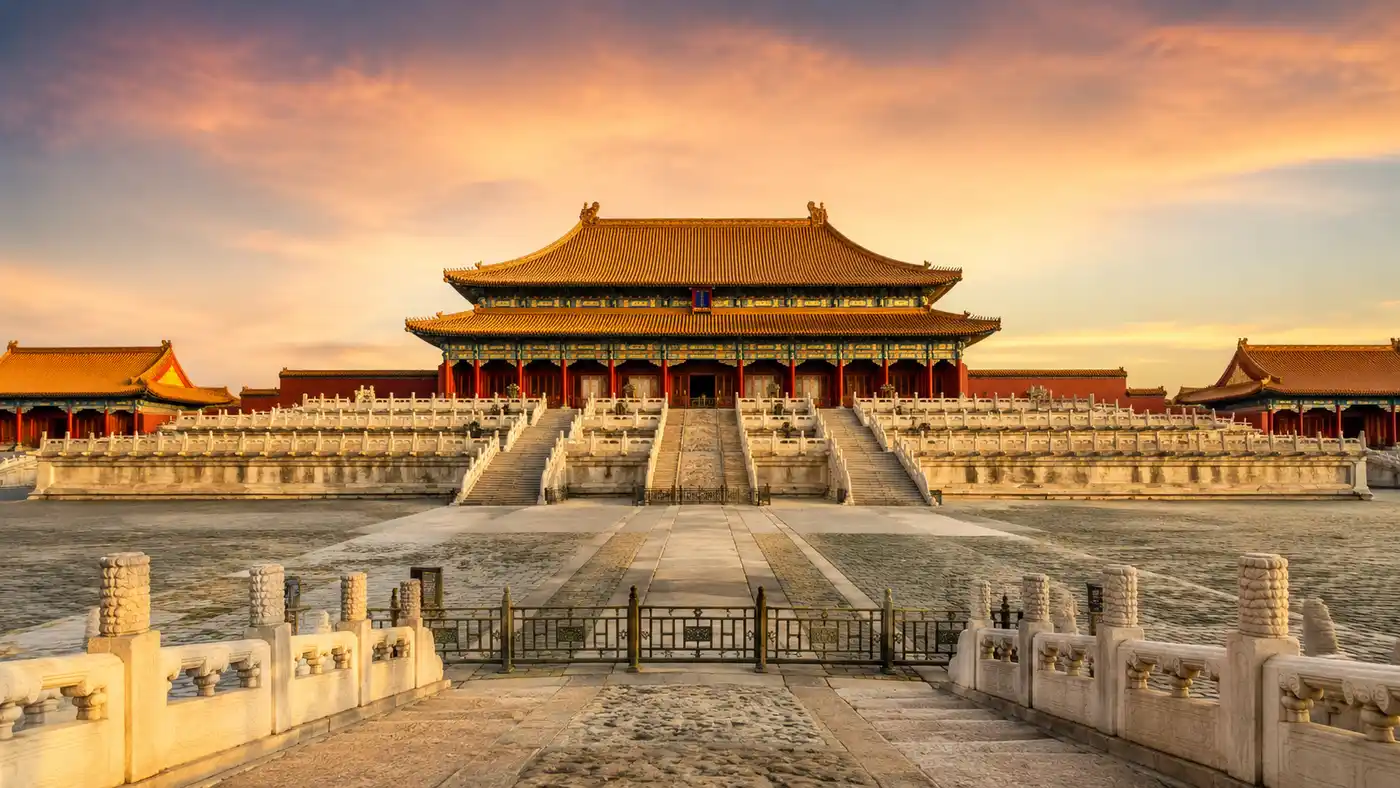
Forbidden City History & Facts
You stand on Tiananmen Square, feeling the immense weight of history. Across the vast expanse, past the Gate of Heavenly Peace, lies a sprawling complex of red walls and golden roofs. This is the Forbidden City, an ancient imperial palace that whispers stories of emperors, concubines, and eunuchs. Many people wonder, why is it called the forbidden city? It is a question that delves deep into Chinese imperial philosophy and the very fabric of its existence. This article will explore the rich forbidden city history, tracing its origins from a grand vision to its enduring legacy. We will uncover when was the forbidden city built, who built the forbidden city, and what was the purpose of the forbidden city for over 500 years. Get ready to peel back the layers of time on one of the world's most magnificent structures.Book your forbidden city beijing experience:
The Emperor's Grand Vision: When was the Forbidden City built?
The story of the Forbidden City begins with an ambitious emperor named Yongle. He was the third emperor of the Ming Dynasty. Yongle seized power in 1402, moving the capital from Nanjing back to Beijing. He immediately envisioned a new imperial residence, one grand enough to reflect his authority and the empire's might. Construction began in 1406. This was no small undertaking. It required incredible resources and an army of workers. The project took about 14 years to complete, with the main structures finished and the court officially moving in by 1420. Think about that for a moment - fourteen years of continuous, back-breaking labor to create this colossal city within a city.Pro tip: When you walk through the Meridian Gate, try to imagine what it must have felt like for an ordinary person to approach this place centuries ago. The scale alone would have been overwhelming, a deliberate display of imperial power.
Architects, Artisans, and the Workforce: Who built the Forbidden City?
Building such a monumental complex required an astonishing labor force. It is estimated that over a million workers were involved, including 100,000 skilled artisans. These weren't just common laborers; they were master carpenters, masons, painters, and sculptors, drawn from all corners of the empire. Their expertise was crucial. The chief architect, Kuai Xiang, is often credited with the overall design. He was an incredibly talented individual. Materials came from far and wide. Massive logs of nanmu wood, highly prized for its durability and fragrance, were transported from the southwestern jungles, a journey that could take years. Huge blocks of marble were quarried near Beijing and moved on ice roads in winter, pulled by thousands of men. Imagine the logistics involved.Note: The human cost of this construction was immense. Many workers died from exhaustion, accidents, or disease during the fourteen-year building period. Their sacrifices underpin the very foundations of the Forbidden City.
Imperial Power and Seclusion: What was the purpose of the Forbidden City?
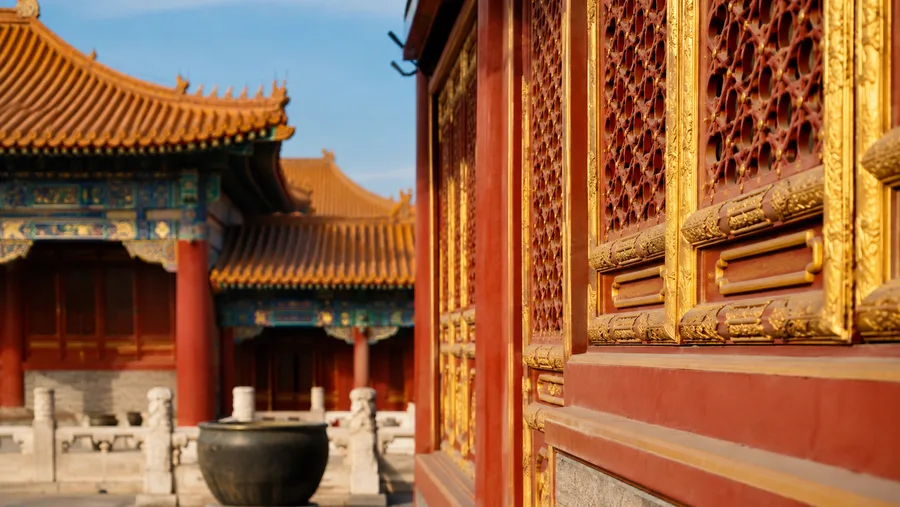
The Forbidden City served as the political and ceremonial center of China for over five centuries. Its primary purpose was to be the imperial residence, a home for the emperor and his vast household. This included his empress, concubines, children, eunuchs, and countless servants. It was a self-contained world. Beyond being a home, it was the nerve center of the empire. All major decisions affecting the vast nation were made within its walls. Official ceremonies, imperial audiences, and crucial state affairs took place in its grand halls. The Hall of Supreme Harmony, for instance, was used for coronations, imperial weddings, and the announcement of new emperors. It was a place of immense power and ritual. Life inside was highly structured and hierarchical. The emperor was at the absolute pinnacle, considered the Son of Heaven, mediating between celestial and earthly realms. The palace was designed to reinforce this divine connection and absolute authority. It was a place where ordinary citizens could not enter, its gates guarded by strict decree. This exclusivity is a key part of why is it called the forbidden city, a concept we will explore more deeply. The entire complex was a living, breathing symbol of imperial rule. Every courtyard, every gate, every building, played a specific role in upholding the emperor's power and the stability of the empire. If you are interested in exploring more about this incredible site, including practical tips for your own visit, you can find a wealth of information on our travel guide to the Forbidden City.Book your forbidden city beijing experience:
Two Dynasties, One Palace: Forbidden City History Through the Ages
The Forbidden City saw the rise and fall of two major dynasties: the Ming and the Qing. Both left their distinct imprints. The Ming Dynasty established the initial grandeur, building most of the structures we see today. They governed from its halls for 276 years. When the Ming Dynasty collapsed in 1644, the Forbidden City was briefly occupied by rebel forces. Soon after, the Manchu armies of the Qing Dynasty swept in, establishing their rule. The Qing emperors, while maintaining much of the Ming layout and architecture, also made their own additions and modifications. They continued to use the palace as their seat of power for another 268 years. For example, the Hall of Mental Cultivation became the de facto residence and office for several Qing emperors, including the famous Kangxi, Yongzheng, and Qianlong. This was a shift from the Ming practice, where emperors resided in other palaces within the complex. You can see how the layout evolved over time, adapting to the needs and preferences of different rulers. For a deeper dive into the layout and specific buildings, you might enjoy reading our article on Forbidden City Map & Architecture. The palace witnessed incredible drama during the Qing era, from the flourishing of imperial culture under Qianlong to the decline of the empire and the eventual abdication of the last emperor, Puyi, in 1912. The Forbidden City then transitioned from an imperial palace to a public museum, marking the end of an era.| Dynasty | Years in Forbidden City | Key Characteristics |
|---|---|---|
| Ming Dynasty | 1420 - 1644 (276 years) | Initial construction, established layout, 14 emperors. |
| Qing Dynasty | 1644 - 1912 (268 years) | Maintained structure, some renovations, 10 emperors. |
Unveiling the Name: Why is it called the Forbidden City?
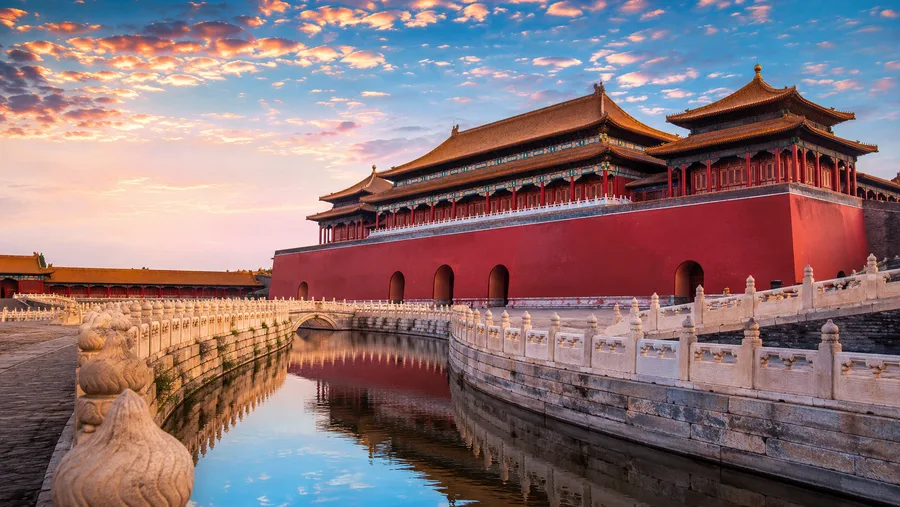
The name "Forbidden City" isn't just a catchy phrase; it reflects the deep-seated political and cosmological beliefs of imperial China. The Chinese name, Zǐjinchéng (紫禁城), translates literally as "Purple Forbidden City." Understanding this name helps us grasp its true significance. First, the "Purple" part. In ancient Chinese astronomy, the North Star was known as the Ziwei Star, or the Purple Star. It was believed to be the celestial abode of the Jade Emperor, the ruler of heaven. Since the earthly emperor was considered the Son of Heaven, his palace on Earth was likened to the heavenly palace. Thus, "Purple" linked the imperial residence to the cosmic center. Then comes the "Forbidden" aspect. This was quite literal. Entry into the palace was strictly prohibited for ordinary citizens. Only the imperial family, high-ranking officials, and authorized servants could pass beyond its imposing walls. Any unauthorized entry meant severe punishment, often death. This physical barrier reinforced the emperor's divine status and absolute authority. Here's why it was truly forbidden:- Imperial Decree: The emperor's word was law, and he decreed that his residence was off-limits to the common populace.
- Security Concerns: Protecting the emperor and his family was paramount. The walls, gates, and guards ensured maximum security.
- Symbol of Power: Its inaccessibility underscored the emperor's elevated status and the mystique surrounding the imperial court.
- Celestial Connection: As the earthly counterpart to the heavenly palace, it mirrored the exclusivity of the gods' abode.
Frequently Asked Questions about why is it called the forbidden city
What does the "Forbidden" in Forbidden City mean?
The "Forbidden" refers to the fact that ordinary people were not allowed to enter the imperial palace without explicit permission. It was strictly off-limits to the general public, enforcing the emperor's absolute authority and divine status.
Why is it called the Purple Forbidden City in Chinese?
In Chinese, it's Zǐjinchéng (紫禁城). "Purple" (Zǐ) refers to the Purple Star (North Star), which in ancient Chinese astronomy was believed to be the celestial home of the Jade Emperor. The earthly emperor, as the Son of Heaven, mirrored this heavenly abode.
When did the Forbidden City stop being forbidden?
The Forbidden City ceased to be an imperial residence in 1912 with the abdication of Puyi, the last emperor. It gradually opened to the public as the Palace Museum, though certain areas remained restricted for a time, eventually making it accessible to everyone.
Quick Reference
- Construction started: 1406
- Completed: 1420
- Number of emperors: 24 (14 Ming, 10 Qing)
- Area: 72 hectares
- Original name: Purple Forbidden City (Zǐjinchéng)
Book your forbidden city beijing experience:
My Take
Exploring the Forbidden City is more than just seeing old buildings. It's about stepping into a bygone era, understanding the mind of an emperor, and feeling the pulse of an empire that lasted for centuries. The history here is palpable, from the grand halls where crucial decisions were made to the quieter courtyards where imperial life unfolded. Its very name, "Forbidden City," tells a story of power, reverence, and a world meticulously ordered around one central figure. You really should experience it for yourself.Read more about forbidden city beijing.